

The Role of Classroom Observation in a Diagnostic Assessment
Written By: Dr. Samantha Smith
A comprehensive diagnostic assessment gathers information from many sources, and one of the most informative, when it is relevant and possible to include, is often the least visible to families: direct observation of the child in the classroom. Parents readily picture the office-based portions of an evaluation, the standardized tasks and interviews, and they can usually describe in detail how their child behaves at home. They may be less familiar with why a clinician would also want to watch their child in the ordinary flow of a school day. That observation can supply information that a testing room, however carefully designed, and a parent's account of home life, however detailed, cannot fully capture on their own.
This piece examines the function of classroom observation within a diagnostic assessment, what it contributes, and how it fits alongside other components of a thorough evaluation. The aim is to help parents across New York understand not only what happens during an observation, and when one is and is not part of the process, but why it strengthens the conclusions a clinician can responsibly draw when it is included.
Why Setting Matters in Assessment
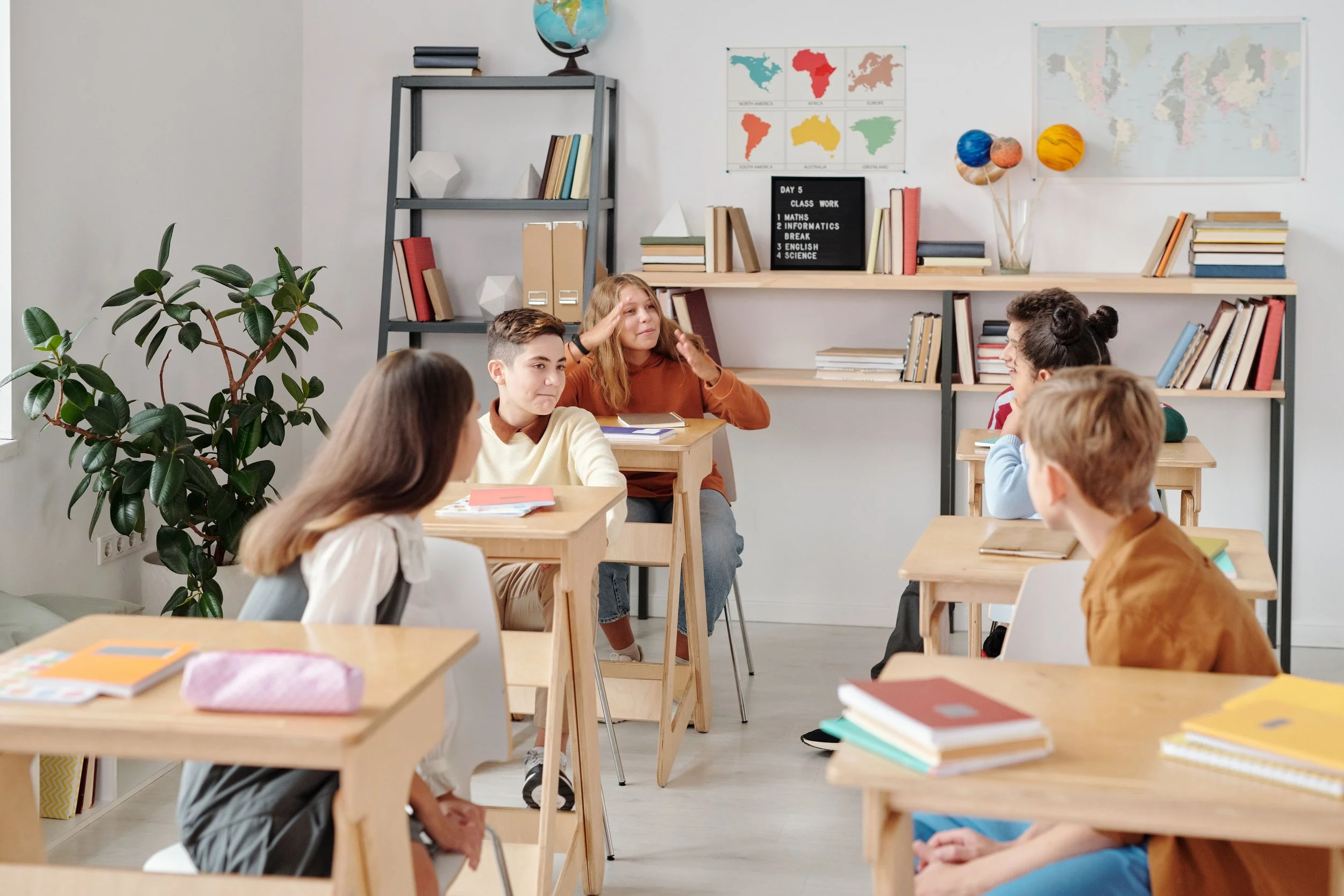
Behavior is never produced in a vacuum. It emerges from the interaction between a child and a specific environment, and a classroom differs profoundly from both a one-on-one testing room and the routines of home. A child who sustains attention across a structured, novel, individually administered task may struggle considerably in a busy room with twenty peers, shifting demands, and few opportunities for individualized support. That same child may present differently again at home, where family routines, sibling dynamics, and a caregiver's attention shaped around one child create yet another set of demands, distinct from both the testing room and the classroom.
This is why clinicians place value on what researchers call ecological validity, the degree to which findings reflect real-world functioning. A diagnostic assessment that relies solely on office-based measures, or solely on a parent's account of behavior at home, risks describing how a child performs under a narrow set of conditions rather than the fuller range of settings where they actually spend their time.
The Limits of the Testing Room
Standardized testing offers precision and control, which are genuine strengths. Those same features, however, remove the very conditions under which many difficulties appear. The quiet, distraction-free testing room, with a single attentive adult, can mask attentional, social, or regulatory challenges that surface only amid the noise and social complexity of a classroom.
What Naturalistic Observation Adds
Observing a child in their natural setting captures behavior as it actually occurs, unprompted by test instructions. A clinician can see how a child responds to transitions, manages frustration, engages with peers, and copes when adult attention is divided. These are the situations that matter most in daily life, and they are difficult to simulate in an office. For conditions where social communication is central, structured tools described in this parent guide to the ADOS evaluation are often paired with naturalistic observation to build a fuller picture.
What a Clinician Looks For
A classroom observation is not a casual visit. It is a structured procedure guided by specific questions the evaluation is trying to answer, and the observer attends systematically to several dimensions of the child's functioning within the classroom's real demands.
Attention and Engagement
How the child orients to instruction, sustains focus, and re-engages after distraction.
Social Interaction
How the child initiates, responds to, and sustains contact with peers and adults.
Regulation and Coping
How the child manages frustration, transitions, waiting, and unexpected changes.
Response to Structure
How the child functions with varying levels of teacher direction and independence.
Comparison to Peers
How the child's behavior compares to that of classmates facing the same demands.
Crucially, the observer also attends to the environment itself, including the pace of instruction, the level of stimulation, and the supports already in place. A behavior that looks like a problem within the child may, on closer inspection, reflect a mismatch between the child and the setting, a distinction with significant implications for what the assessment recommends.
Integrating Observation With Other Data
Classroom observation is powerful precisely because it does not stand alone. Its value emerges when it is placed alongside standardized testing, developmental history, parent and teacher reports, and direct interaction with the child. Each source has strengths and blind spots, and convergence across them is what allows a clinician to reach confident conclusions.
When observational findings align with test results and reports from home and school, the picture becomes coherent and trustworthy. When they diverge, that divergence is itself informative, prompting the clinician to ask why a child performs one way in the office, another at home, and another still in the classroom. Either way, the observation enriches the interpretation rather than simply adding data. Families sometimes find that pairing an evaluation with parent coaching helps translate these integrated findings into concrete steps at home and school.
The Danger of Single-Source Conclusions
Relying on any one source, whether a single test score, a single teacher's impression, or a single parent's account of behavior at home, invites error. A comprehensive assessment deliberately triangulates, drawing on testing, history, and reports across settings so that no single perspective carries the full weight of a conclusion. Classroom observation is one of the sources that can capture a child in a demanding, social, real-world context, and it is included whenever it is relevant to the referral questions and logistically possible.
When Observation Isn't Part of the Process
A classroom observation adds value when it is relevant and feasible, but it is not a required step in every assessment, and its absence does not mean an evaluation is incomplete. Timing sometimes rules it out. A family beginning testing over summer break, for example, may complete the full evaluation before school is back in session.
In situations like this, the evaluator determines whether and when an observation would meaningfully inform the referral questions and communicates that directly with the family, rather than treating its absence as an automatic shortcoming. The other components of a comprehensive assessment, including standardized testing, developmental history, and reports gathered across settings, continue to provide a thorough and reliable picture on their own.
Practical Guidance for Parents Whose Child Will Be Observed
When a clinician proposes a classroom observation, whether at the outset of the evaluation or scheduled for later once school is back in session, parents naturally have questions about how it works and how to prepare. The following steps address the most common concerns and are intended to help the process go smoothly for everyone, including the child.
1. Understand the Purpose
An observation is not a test your child can pass or fail, and it is not a judgment of your parenting or the teacher's competence. It is a way of seeing your child in context. Understanding this reframes the process from something to dread into a routine part of a thorough evaluation.
2. Coordinate With the School
Observations require cooperation among the family, the clinician, and the school. Sharing relevant information and permitting communication among the adults involved helps ensure the observation captures a representative day. Most schools are experienced with this process and accommodate it readily.
3. Keep the Day Ordinary
The observation is most useful when the day is typical. It is best not to tell a young child that they are being watched or to alter routines in an effort to produce good behavior. A representative sample of ordinary functioning is exactly what the clinician needs.
4. Review the Findings Together
After the observation, ask the clinician to walk you through what was seen and how it fits with the rest of the assessment. This conversation is where observation becomes actionable, translating what happened in the classroom into recommendations you and the school can use.
What Observation Adds to the Picture
Classroom observation rarely overturns an evaluation's conclusions outright. More often, it adds a piece that helps explain why a child presents differently across settings, and that distinction matters. A child who appears inattentive or dysregulated at home but composed in the classroom is not necessarily revealing that the difficulty lies with the home environment.
Many children draw on considerable effort to hold themselves together at school, sustaining attention, moderating their reactions, and following routines in a setting with clear structure and social expectations. Clinicians and researchers refer to this pattern as masking, and it can leave a child with little capacity left to regulate once they return to the comfort and lower demands of home. Observation, in a case like this, does not point to either setting as the source of the problem; it helps clarify how much effort a child is exerting to meet classroom demands and what that effort may be costing them elsewhere.
The reverse pattern also occurs. A child who manages well in a quiet testing room or a familiar home routine can still struggle once immersed in the social and sensory demands of a full classroom, where attention is divided among many students and expectations shift throughout the day.
Neither pattern means that one setting shows the true version of the child while the other is a distortion. Each setting places different demands on a child, and observing how a child meets those demands in the classroom adds context that testing and reports from home cannot fully supply on their own, helping the clinician understand not just what a child does, but why they may do it differently depending on where they are.
This capacity to add context and help explain divergent presentations is precisely why experienced clinicians treat classroom observation as a valuable component of a rigorous assessment, when it is relevant and possible, particularly for questions involving attention, social communication, and behavior in group settings.
Conclusion
Classroom observation earns its place in a diagnostic assessment because it captures something that neither office-based testing nor a parent's account of home life can fully offer on its own: the child functioning in the real, demanding, socially complex environment where they spend much of their day. By adding ecological validity, revealing the interaction between child and setting, and helping explain how a child's presentation can shift across home, testing, and school, observation strengthens the accuracy and usefulness of the evaluation whenever it is part of the process.
If your child is undergoing an assessment, or if you are weighing whether one is warranted, understanding the value of classroom observation can help you engage as an informed partner in the process. The clinicians at Everyday Parenting conduct comprehensive, multi-source evaluations and offer parent coaching to help families put the findings to work. Reach out to learn how a thorough, context-aware assessment can support your child's path forward.
At Everyday Parenting, we believe in empowering families to create meaningful connections and navigate challenges with compassion and confidence. Whether you're seeking strategies to address specific behaviors or simply want to strengthen your family bond, we’re here to support you every step of the way. Contact us today to learn how our evidence-based approaches can help your family thrive.