

How Children Understand Death at Different Developmental Stages
Written By: Julie Milstein, LMSW
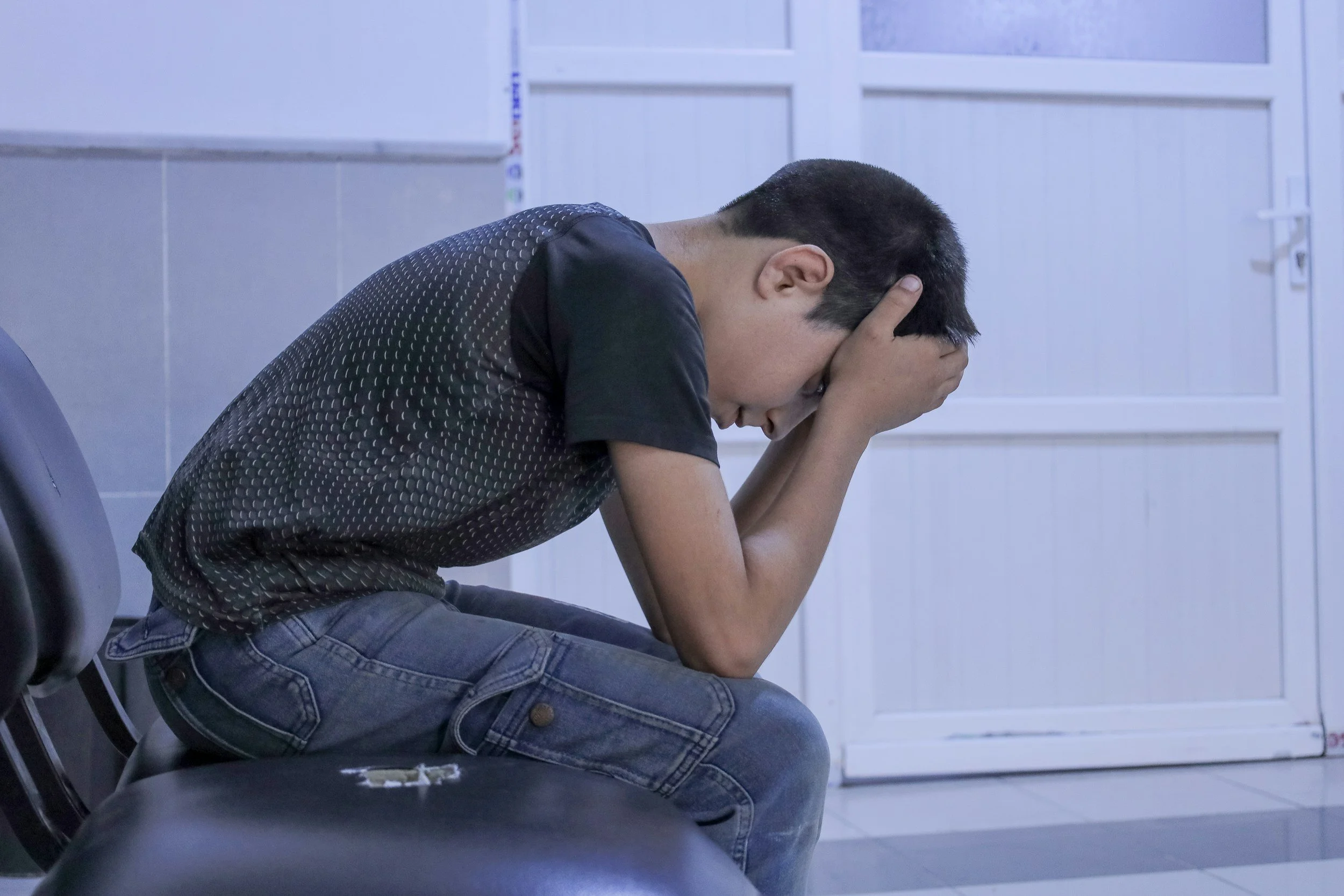
When a death enters a family, adults often assume children register the event the way they do. Research on child development points in a different direction. A child's understanding of death is not a single insight that arrives all at once. It forms gradually, shaped by cognitive maturity, language, and direct experience.
A four-year-old and a fourteen-year-old are working from fundamentally different mental frameworks, and both differ from an adult's. This article lays out what developmental science tells us about how children come to comprehend loss, and why the same event can look so different depending on a child's age.
The Building Blocks of Understanding Death
Researchers who study bereavement generally describe a mature concept of death as resting on several distinct components. Children do not acquire these all at once. The pieces tend to consolidate between roughly ages five and ten, though the timing varies from child to child.
Four components make up what psychologists consider a full understanding of death:
1. Irreversibility
This is the recognition that once a living thing dies, its body cannot return to life. Younger children frequently assume death is temporary, closer to sleep or a trip that ends in a return.
2. Finality
Sometimes called nonfunctionality, this is the understanding that all life-defining functions, including breathing, eating, thinking, and feeling, stop at death. Before this idea takes hold, a child may worry that a grandparent who has died is cold, hungry, or frightened.
3. Universality
This is the awareness that death happens to every living thing, including the child and the people they love most. Once this realization lands, it can surface new worry about safety.
4. Causality
This is a grasp of the biological and external reasons living things die, rather than magical or self-referential explanations such as the belief that an angry thought caused the loss.
A child who has integrated all four ideas holds a mature concept of death. A child who has not is not confused or behind; they are simply reasoning with the cognitive tools available at their stage. The ages attached to these components are approximate rather than fixed, and it is common for a child to hold one idea firmly while another is still forming, which is why the same child may speak matter-of-factly about a body no longer working and then ask when the person is coming home.
Direct experience also tends to accelerate this development. A child who has lived through the death of a pet, a grandparent, or a community member often demonstrates a firmer grasp than peers who have not, because the event has given them something concrete to reason about. Comprehension is not purely a function of age; it is age interacting with exposure, which is one reason children in the same family can differ in how readily they absorb what has happened.
The Early Years: Infancy Through Preschool
The youngest children have no conceptual understanding of death at all. What changes across these first years is not comprehension of the event itself but the child's growing ability to notice its effects and, eventually, to ask about it.
Infancy and Toddlerhood
Infants and toddlers register disruption rather than loss. A caregiver is missing, a routine has changed, and the emotional climate of the home feels different. Very young children are attuned to the presence and mood of the adults around them, and they respond to separation and to shifts in that emotional field long before they can name what has happened. Their sense of stability comes through the steadiness of the people caring for them, which is why co-regulation matters so much at this stage.
The Preschool Years
Preschoolers reason through magical thinking, where cause and effect are loosely linked and the boundary between the real and the imagined is thin. Death is commonly understood as reversible, an idea reinforced by cartoons in which characters spring back to life. Language is taken literally, which is why euphemisms such as lost or went to sleep can produce genuine fear. Egocentric reasoning is also typical, so a young child may privately conclude that their own behavior or a passing wish brought about the death, and naming gently and more than once that this is not the case addresses a worry the child may never voice on their own. Play is one of the primary ways preschoolers metabolize what they cannot yet articulate, so reenacting goodbyes or folding themes of dying and returning into games is developmentally ordinary.
The Older Years: School Age Through Adolescence
As children mature cognitively, their questions about death become more accurate and, often, more difficult. The shift is from wondering whether death is real to grappling with what it means.
School-Age Children
Around age six or seven, children move into more concrete and logical reasoning, and the components of a mature understanding begin to consolidate. Many become curious about the biological facts and may personify death or become preoccupied with questions of fairness. As universality takes hold, worry about the safety of surviving parents and about their own mortality is common, and it can show up in the body as stomachaches, headaches, or trouble sleeping. Because children this age are building the capacity to notice internal signals, resources on emotional awareness and the role of interoception in managing anxiety offer useful context.
Adolescence
By adolescence, young people can think abstractly, and their questions shift toward meaning, fairness, and mortality in ways that resemble adult reflection. Grief at this age is easy to miss, since a teen may appear composed while processing intense feelings privately or through peers. Some express loss through withdrawal, changes in academic engagement, or heightened risk-taking, which is why evidence-based therapeutic support for big feelings can matter when a teenager is carrying a significant loss.
How the Same Loss Looks Across Ages
Because understanding develops unevenly, siblings in the same household can respond to the same death in strikingly different ways. Recognizing the patterns that tend to accompany each stage helps families read a child's behavior as communication rather than as a problem to correct.
Toddlers may regress in sleep, feeding, or independence, and may search or ask for the person who is gone.
Preschoolers may repeat the same questions many times and weave death into their play, which is a normal way of working it through.
School-age children may report physical complaints and voice worry about further loss, wanting reassurance about who will care for them.
Adolescents may seem unusually private or unusually busy, processing internally, with peers, or through creative and physical outlets.
None of these responses is a malfunction. Each reflects a child's stage and temperament meeting an experience that is genuinely hard to hold.
What Shapes a Child's Response Beyond Age
Developmental stage sets the framework, but it is not the whole story. A child's temperament, any prior experience with loss, and the closeness of the relationship all influence the response, and so does the family's communication style. Households that name feelings openly and answer questions honestly tend to help children make sense of what has happened, while long silences can leave a child to fill the gaps with their own theories.
Studies of childhood bereavement point consistently to open, honest communication as a protective factor. Children who receive accurate information in language suited to their stage, and who are free to ask questions, tend to fare better than those shielded from the facts. Silence rarely protects a child; more often it leaves them to assemble an explanation from fragments, and the version they invent is frequently more frightening than the reality.
Cultural and religious frameworks also give children language and ritual for understanding death, and these traditions can be a genuine source of steadiness rather than a complication to manage. A shared practice, whether a memorial custom or a spiritual explanation, offers a child a container for feelings that might otherwise have nowhere to go. For a fuller discussion of how a whole family moves through loss together, our post on the emotional impact of grief on parenting offers additional context.
When to Seek Additional Support
Most children move through grief with the steady support of the adults around them. Sometimes, though, added support is warranted. Persistent sleep disruption, a marked and lasting drop in functioning at school, prolonged withdrawal, or intense fear that does not ease over time can signal that a child would benefit from professional guidance.
Understanding how a child's mind is built to comprehend death does not remove the pain of loss, but it does help families meet a child where they actually are. When more support would help, grief counseling for families and family therapy provide a structured place to process loss together, and our grief counseling services are designed with children's developmental needs in mind. If your family is navigating a loss, our team is here to help you find the right starting point.
At Everyday Parenting, we believe in empowering families to create meaningful connections and navigate challenges with compassion and confidence. Whether you're seeking strategies to address specific behaviors or simply want to strengthen your family bond, we’re here to support you every step of the way. Contact us today to learn how our evidence-based approaches can help your family thrive.