

Back-to-School Anxiety for Parents
Written By: Everyday Parenting
Back-to-school season is often framed as a challenge for children, and it is. Yet a quieter dynamic runs alongside it: parents carry their own anxiety about the transition, and that anxiety travels. Long before a child registers the shift from summer to structure, many parents are already anticipating logistics, academic pressures, social worries, and the return of a demanding schedule. This piece looks closely at parental anxiety during the back-to-school period, why it matters, and how it can be understood and managed.
The intention here is not to add another item to an already crowded worry list. It is to describe, with some precision, how parental and child anxiety interact during this season, so that parents across New York and the wider East Coast can approach the transition with more clarity and less self-blame.
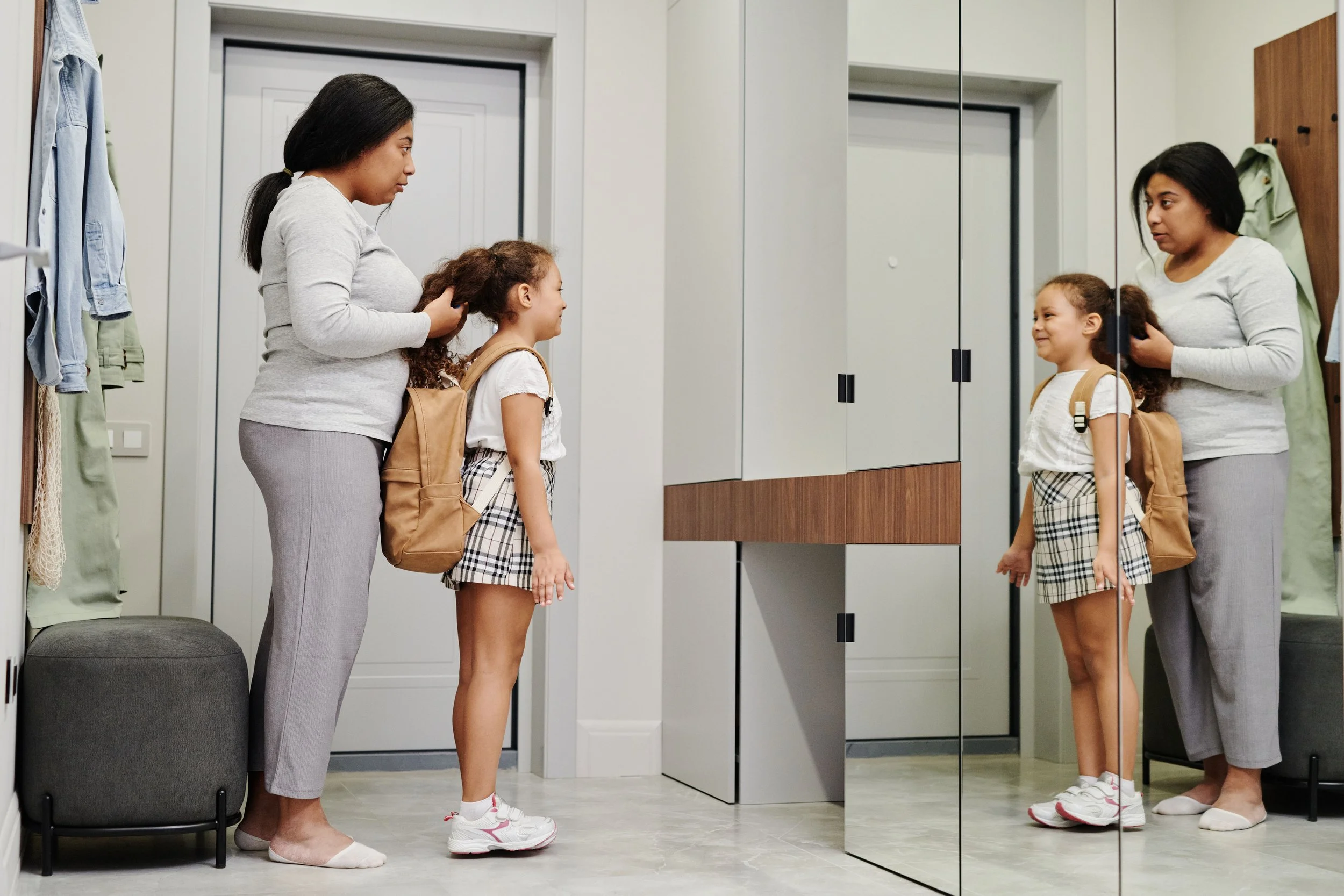
How Parental Anxiety Travels to Children
Children are remarkably attuned to the emotional states of the adults who care for them. This attunement is adaptive; a young nervous system that can read a caregiver's mood gains information about whether the environment is safe. During periods of transition, this same sensitivity means that a parent's unspoken worry can register with a child even when nothing is said aloud.
Researchers describe this transmission through the concept of co-regulation, the process by which one person's nervous system influences another's. A calm, grounded parent offers a kind of borrowed stability. A parent who is bracing for difficulty, however understandably, may inadvertently communicate that the coming weeks are something to fear.
The Feedback Loop
The interaction rarely runs in one direction. A parent's anxiety can heighten a child's unease, and a child's distress can in turn intensify the parent's worry, producing a loop that gathers momentum as the first day approaches. Recognizing this loop is the first step toward interrupting it, because it locates the dynamic in the relationship rather than in any single person's failing.
Why This Season Amplifies It
The back-to-school period concentrates a number of stressors at once, including schedule changes, new teachers, shifting friendships, and renewed academic demands. For parents who are themselves managing work and household transitions, the density of change is significant. When a child's behavior becomes harder to read during this window, structured child behavior support can help families distinguish ordinary transitional stress from patterns that warrant closer attention.
Naming the Parent's Experience
Parental anxiety during this season is common and rarely discussed openly. Parents may feel they should have transitions handled, particularly if they have navigated several school years already. This expectation can make the anxiety harder to acknowledge, which in turn makes it harder to manage.
Giving the experience a name and a shape reduces its power. Parental back-to-school anxiety tends to cluster around a recognizable set of themes, and seeing them listed can be clarifying rather than alarming.
Anticipatory worry about how a child will cope academically or socially.
Logistical overwhelm as schedules, forms, and commitments accumulate.
Separation unease, particularly for parents of younger children or children starting a new school.
Comparison pressure fueled by conversations with other parents and by social media.
Residual stress carried over from previous years that did not go smoothly.
None of these themes reflects a deficiency in a parent. They reflect the real complexity of orchestrating a family's return to structured life. Naming them allows a parent to respond to a specific worry rather than a diffuse sense of dread.
The Case for Working on Your Own Regulation First
There is a reason flight-safety briefings instruct adults to secure their own oxygen before assisting others. The principle applies squarely to back-to-school anxiety. A parent who tends to their own regulation is better positioned to offer a child the steadiness that co-regulation depends on.
This does not require a parent to feel calm at all times, an unrealistic and unnecessary standard. It requires a parent to notice their own state and to have a few reliable ways of returning to baseline. When a parent can model the process of getting anxious and then settling, the child receives something more valuable than a performance of calm: a demonstration that anxiety is manageable. For parents who want structured guidance in building these skills, parent coaching offers a practical setting to develop and rehearse them.
Modeling, Not Masking
Children learn less from what parents say about emotions than from what they watch parents do with them. A parent who names a feeling honestly, such as acknowledging nerves about a busy morning, and then shows how they cope, teaches emotional competence directly. Masking anxiety entirely can leave a child sensing tension without an explanation, which is often more unsettling than an honest, age-appropriate acknowledgment.
Practical Guidance for the Transition
The following steps are meant to be applied steadily across the weeks surrounding the start of school rather than crammed into the final days. Each addresses a specific driver of back-to-school anxiety, and each works best when it becomes a small routine rather than a one-time effort.
1. Rebuild Routines Gradually
Sleep, mealtimes, and morning rhythms drift over the summer, and an abrupt return to a school schedule concentrates stress into the first week. Shifting bedtimes and wake times by small increments over one to two weeks allows everyone's system, parents included, to adjust with less friction. Predictability is a powerful antidote to anxiety.
2. Externalize the Logistics
Much parental anxiety is the mental labor of holding countless details in mind at once. Moving those details onto a shared calendar, a checklist, or a family board frees working memory and reduces the sense of being overwhelmed. What is written down no longer needs to be worried about.
3. Create a Worry Window
Rather than letting anxiety surface at unpredictable moments, some families set aside a brief, contained time to discuss concerns about the year ahead. This practice, sometimes called a worry window, keeps anxiety from saturating every conversation and models the idea that worries can be addressed deliberately rather than avoided or indulged.
4. Protect a Point of Calm
Amid the intensity of the transition, preserving one reliable moment of connection, such as a shared breakfast or a short evening check-in, gives both parent and child an anchor. These moments are not luxuries. They are the relational ballast that keeps the season steady.
When Anxiety Signals Something More
For most families, back-to-school anxiety rises, peaks, and settles within the first few weeks of the school year. When it does not, or when it interferes significantly with sleep, appetite, or a child's willingness to attend school, it may point to something that would benefit from professional attention. This is true for parents as well as children.
Persistent anxiety is not a sign of failure, and seeking support is not an overreaction. Many families find that a few sessions of focused guidance make a meaningful difference;parent coaching offers an accessible starting point for parents who want to address the season's stress before it settles into a pattern.
Conclusion
Back-to-school anxiety is a shared family experience, not a private failing of either parent or child. Because a parent's emotional state and a child's are so closely linked, the most effective place to begin is often with the parent's own regulation, rebuilt through routine, honesty, and small, reliable points of connection. Approached this way, the transition becomes an opportunity to teach a lasting lesson: that change is manageable and that anxiety, faced openly, can be navigated together.
If the start of the school year consistently brings more stress than your family can comfortably absorb, support is available. The coaches at Everyday Parenting help parents across New York move through seasonal transitions with more steadiness and less dread. Reach out to learn how a grounded, collaborative approach can make the coming year feel more manageable.
At Everyday Parenting, we believe in empowering families to create meaningful connections and navigate challenges with compassion and confidence. Whether you're seeking strategies to address specific behaviors or simply want to strengthen your family bond, we’re here to support you every step of the way. Contact us today to learn how our evidence-based approaches can help your family thrive.
