

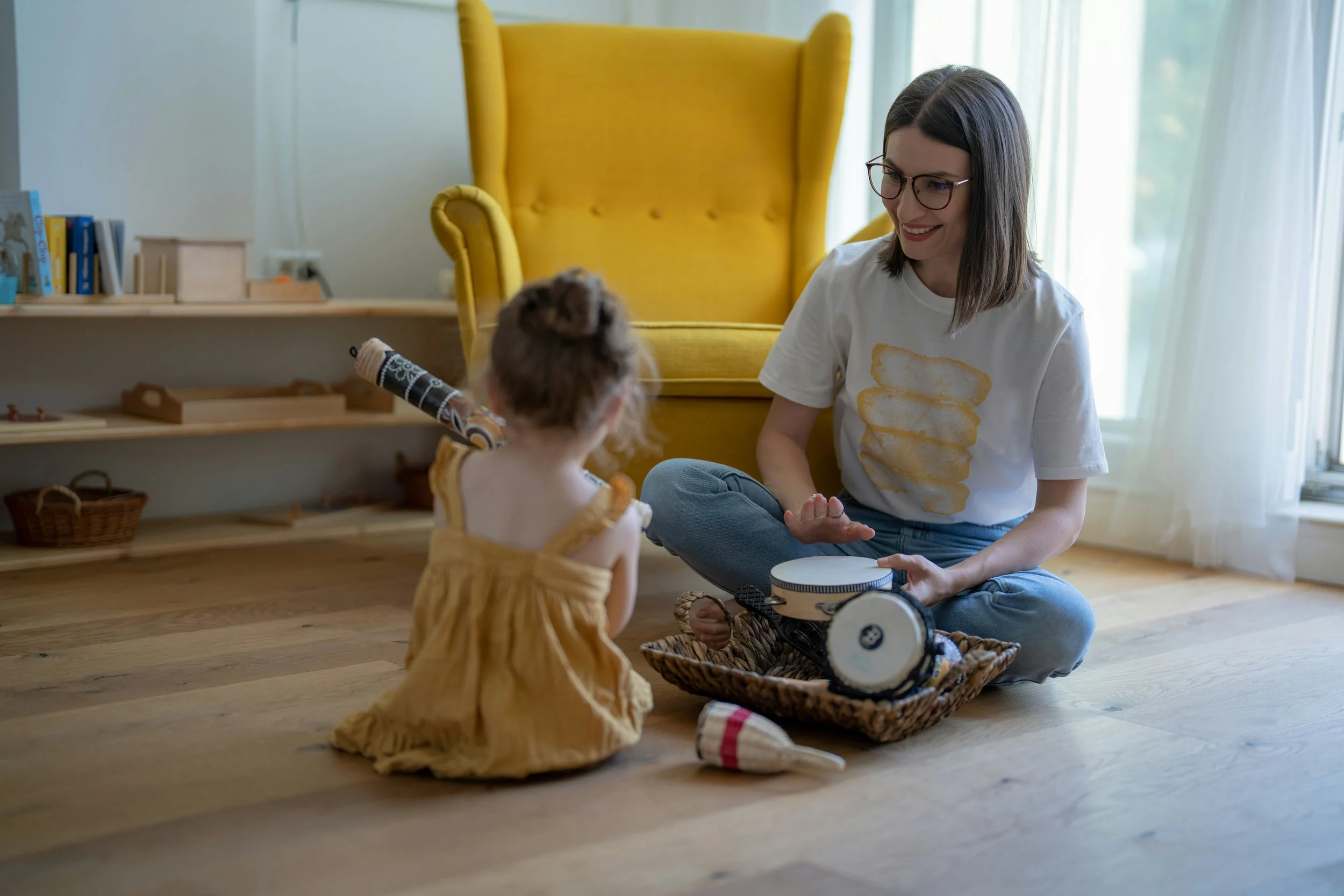
Early Childhood ADHD Evaluation in Westchester & NYC
Developmentally Sensitive Assessments That Give You Clarity When Early Intervention Matters Most
EVERYDAY PARENTING PSYCHOLOGY, PLLC
You know your child better than anyone. Maybe it is the way they cannot sit still during story time at preschool, the explosive meltdowns that seem to come from nowhere, or the feeling that daily routines like getting dressed and eating breakfast have become exhausting battles.
You have mentioned it to your pediatrician, and you were told to wait, that your child is "just being a toddler" and will probably grow out of it. But something in you says this is different, and you are looking for real answers.
You are right to trust that instinct. Research consistently shows that ADHD can be reliably identified in children as young as two and three years old by clinicians who specialize in early childhood development. The problem is not that young children cannot be accurately assessed; it is that most providers are not trained to do it at this age. At Everyday Parenting Psychology, our clinicians hold deep expertise in the intersection of early development and attention, impulsivity, and self-regulation. We use play-based, developmentally sensitive methods designed specifically for the birth-to-five population, ensuring that what we observe reflects your child's true functioning, not just a stressful moment in an unfamiliar office.
Families across Westchester County and New York City choose Everyday Parenting Psychology because we do not ask you to wait when waiting means missing the window where early intervention is most powerful. Our offices in Hartsdale and Midtown Manhattan are designed to feel safe and welcoming for very young children, and every evaluation is built around your family's specific concerns. When you leave, you will have not just a diagnosis or a rule-out, you will have a clear, actionable path forward.
An ADHD evaluation for toddlers and preschoolers at Everyday Parenting Psychology is a comprehensive, multi-method assessment designed to capture a full picture of your young child's attention, behavior, emotional regulation, and development.
Unlike evaluations designed for school-age children that rely heavily on classroom observation and paper-and-pencil tasks, our early childhood assessments are built around play-based observation and developmentally appropriate interaction, because a three-year-old shows you who they are through how they play, explore, and relate, not through how they perform on a test.
The evaluation process begins with an in-depth caregiver interview, where our clinician takes the time to understand your child's history, your family's daily life, and the specific concerns that brought you in.
We want to hear about the morning routine, what bedtime looks like, how transitions go, and what happens when your child is frustrated or overwhelmed. This conversation is not a checklist; it is a collaborative dialogue that helps us understand your child in context. We also review any existing records, including developmental screenings, pediatrician notes, and reports from daycare or preschool programs.
The heart of the evaluation is a structured play-based observation of your child, during which our clinician creates opportunities to assess attention, impulse control, activity level, emotional reactivity, and flexibility. We also conduct a caregiver-child interaction observation to understand relational dynamics and how your child responds within their primary attachment relationship. Standardized questionnaires validated for early childhood complete the clinical picture, giving us both qualitative and quantitative data.
At the conclusion of the evaluation, you receive a detailed report with clear findings, a diagnostic determination when appropriate, and specific recommendations tailored to your child's age and needs, including guidance on early intervention services, school accommodations, parenting strategies, and whether further monitoring or treatment is warranted. Families in Westchester and Manhattan consistently tell us that this level of thoroughness gives them not just clarity, but genuine relief.
Get Answers Early, Before the Window Closes
Key Benefits
-
Not every psychologist is equipped to evaluate ADHD in a two-year-old or a four-year-old, and for good reason, it requires a specialized skill set that sits at the intersection of developmental psychology, infant and early childhood mental health, and clinical assessment. The presentation of ADHD in toddlers and preschoolers looks different from what most people picture. There may not be a child bouncing off the walls in a classroom. Instead, you might see a child who cannot follow a two-step direction, who melts down every time an activity ends, who hits or throws when frustrated faster than their peers, or who seems unable to engage with a toy for more than thirty seconds before moving to the next thing.
At Everyday Parenting Psychology, our clinicians have advanced training in early childhood development and are experienced in distinguishing between developmentally typical behavior and clinically significant patterns of inattention, hyperactivity, and impulsivity. This distinction matters enormously at this age because the overlap between "normal toddler behavior" and early ADHD symptoms is exactly where most generalist providers get stuck, and where the default advice becomes "let's wait and see." Our team does not rely on a single data point or a brief office visit. We use multiple methods, multiple informants, and deep developmental knowledge to arrive at conclusions you can trust.
For families in Westchester County and New York City, this means access to a level of early childhood ADHD expertise that is genuinely difficult to find. You will not be referred out, put on a months-long waitlist for a specialist, or told your child is too young. You will be seen by someone who does this work every day and understands the urgency you feel.
-
Toddlers and preschoolers do not sit in a chair, answer questions, and fill out forms. They communicate through movement, play, emotional expression, and interaction. An evaluation that fails to account for this reality will produce unreliable results and potentially lead to a missed diagnosis or an incorrect one. That is why every ADHD assessment at Everyday Parenting Psychology for children birth to five is grounded in play-based, developmentally sensitive methods that meet your child exactly where they are.
During the evaluation, our clinician sets up carefully designed play scenarios that allow your child to engage naturally while we observe key behavioral indicators: how they sustain attention during a preferred activity versus a non-preferred one, how they handle transitions between tasks, how they manage frustration, and how they regulate their energy and impulses in a low-demand versus a high-demand context. These observations are far more informative than asking a preschooler to sit still and concentrate on command, which, frankly, is not something most young children do well, regardless of whether ADHD is present.
We also observe caregiver-child interaction because we know that your child's behavior does not exist in a vacuum. Watching how your child responds to you, to your cues, your redirection, and your comfort, gives us essential clinical data about regulation, attachment, and relational functioning. This layer of the assessment is something many evaluations skip entirely, but for young children, it is often where the most meaningful information emerges. Families in Manhattan and Westchester appreciate that our process feels natural and comfortable for their child, not like a test. Your child will likely enjoy the session. And we will gather everything we need to give you clear, confident answers.
-
The single most important reason to pursue an ADHD evaluation for your toddler or preschooler, rather than waiting until kindergarten or first grade, is that early intervention during the birth-to-five period produces significantly better outcomes than intervention that begins later. This is not opinion; it is supported by decades of neurodevelopmental research. The young brain is remarkably plastic, and the skills that ADHD disrupts, attention regulation, impulse control, emotional flexibility, and executive functioning, are actively being built during these years. When we identify ADHD early, we can support the development of these skills during the period when your child's brain is most responsive to intervention.
What does early intervention look like for a toddler or preschooler with ADHD? It may include parent coaching to help you adjust your approach to discipline, routines, and transitions in ways that work with your child's neurology rather than against it. It may include occupational therapy, behavioral strategies at home and in preschool, or consultation with your child's educators to ensure the classroom environment supports their needs. In some cases, it may mean connecting with Early Intervention or Committee on Preschool Special Education (CPSE) services, and having a comprehensive evaluation report from Everyday Parenting Psychology gives you the documentation you need to access those services.
Without early identification, many children with ADHD enter kindergarten already behind, not because they lack intelligence, but because they have spent years struggling without support, developing negative self-perceptions, and experiencing repeated conflict with caregivers and teachers. Families across Westchester and NYC come to us because they want to get ahead of that cycle. They want to give their child every advantage during the years when it matters most, and that starts with an accurate, thorough evaluation.
-
ADHD in very young children rarely presents in isolation. It often co-occurs with speech and language delays, sensory processing differences, anxiety, sleep difficulties, and other developmental variations. A narrow evaluation that looks only for ADHD, or only at behavior, will miss the full picture. At Everyday Parenting Psychology, our assessments are designed to be comprehensive, examining attention and impulse control alongside developmental milestones, emotional regulation, sensory responses, and the quality of caregiver-child interaction.
This matters because the recommendations that come out of an evaluation are only as good as the evaluation itself. If a clinician identifies ADHD but misses an underlying language delay that is contributing to frustration and meltdowns, the intervention plan will be incomplete. If anxiety is driving some of the restlessness and distractibility, the treatment approach needs to account for that. Our clinicians are trained to hold multiple possibilities simultaneously and to use differential diagnosis as a rigorous clinical tool, not a quick label.
For parents in Westchester County and New York City, many of whom have already received conflicting opinions from pediatricians, preschool teachers, and well-meaning family members, this comprehensive approach provides something invaluable: a single, coherent narrative about what is happening for their child and why. Your evaluation report will not be a generic template. It will be a detailed, personalized document that reflects your child's unique profile and gives every provider involved in your child's care a clear, shared understanding of their needs.
-
Walking into an evaluation with your very young child can feel intimidating, especially if you are already carrying the weight of worry, self-doubt, or the frustration of being dismissed by other providers. Many parents tell us they are nervous that they will be judged for their child's behavior, or that the evaluation will be stressful and upsetting for their toddler or preschooler. We understand those concerns deeply, and we have intentionally designed every aspect of our process to make you and your child feel safe, respected, and supported.
Our offices in Hartsdale and Midtown Manhattan are set up with young children in mind, warm lighting, comfortable seating, age-appropriate toys, and spaces where your child can move freely. The evaluation itself is paced to match your child's energy and tolerance, with built-in breaks and flexibility. If your child needs to sit in your lap, wander the room, or take a snack break, that is completely welcome and clinically informative. We are not trying to create a controlled laboratory environment. We are trying to see your child as they really are.
For you as the parent, the experience is equally important. Our clinicians approach the caregiver interview with curiosity and compassion, not interrogation. We know that parenting a child who may have ADHD is exhausting, and we know that you are doing your best. You will not be made to feel like you caused this or that you should have come sooner. You will be treated as the expert on your child that you are, and as a full partner in the evaluation process. Families throughout the New York metro area consistently describe their experience with Everyday Parenting Psychology as the first time they felt truly heard.
-
Finding a qualified early childhood ADHD specialist is challenging enough without adding logistical barriers. Everyday Parenting Psychology offers two convenient office locations, one in Hartsdale in the heart of Westchester County and one in Midtown Manhattan, making it accessible whether you are coming from Scarsdale, White Plains, Bronxville, the Upper West Side, or anywhere in the NYC metro area. For families who need added flexibility, we also offer telehealth services for applicable portions of the evaluation process.
We understand that scheduling an evaluation for a toddler or preschooler comes with unique logistical challenges, such as nap times, preschool schedules, and sibling care. Our team works with you to find appointment times that minimize disruption to your child's routine, because a well-rested, comfortable child gives us the most accurate clinical data. We also aim to minimize the overall timeline from initial consultation to completed report, because we know that when you are worried about your child, every week of waiting feels like a month.
Everyday Parenting Psychology was founded in 2018 by Dr. Jeanette Sawyer Cohen and Dr. Layne Raskin, and has grown to a team of experienced clinicians who serve families across the New York metropolitan area. Our practice was built on the belief that families deserve access to the highest caliber of clinical care without unnecessary barriers, and that starts with making it easy for you to walk through our door.
Service Categories
Early Childhood ADHD Evaluation (Birth–5)
Comprehensive, play-based ADHD assessment for toddlers and preschoolers. Our evaluation includes caregiver interviews, structured play observation, developmental milestone assessment, caregiver-child interaction observation, standardized questionnaires, and record review, all tailored specifically for children under five. You receive a detailed report with diagnostic findings and actionable next steps.
Parent Coaching for ADHD
Individualized coaching that helps parents understand their young child's ADHD profile and develop practical strategies for daily routines, transitions, emotional meltdowns, and behavior management. We focus on approaches that work with your child's neurology, reducing conflict and building connections at home.
Neurodiversity-Affirming Care
A strengths-based approach to supporting neurodivergent children and families. We affirm your child's identity while addressing real challenges in attention, regulation, and social-emotional development. Our team helps families move from confusion and frustration to understanding and advocacy.
Developmental and Diagnostic Assessments
Beyond ADHD, our clinicians conduct thorough evaluations for a range of developmental concerns in young children, including autism, language delays, sensory processing differences, and twice-exceptional (2e) profiles. When multiple concerns overlap, we provide a clear differential diagnosis and integrated recommendations.
Family Therapy and Support
Therapy that is designed to strengthen family functioning when a young child's behavioral or developmental challenges are creating stress, conflict, or disconnection. We support parents, siblings, and the family system as a whole through transitions, diagnosis, and adjustment.
Our Process
Step 1: Schedule Your Initial Consultation
Contact us through our website or by phone to schedule your first appointment. During this brief conversation, we will learn about your primary concerns, confirm that an early childhood ADHD evaluation is the right fit, and find a time that works for your family's schedule. Most families are scheduled within one to two weeks of reaching out.
Step 2: In-Depth Caregiver Interview
In this dedicated session, your clinician spends extended time with you, the parent or primary caregiver, to build a thorough understanding of your child's history, behavior patterns, daily routines, developmental milestones, family context, and your specific concerns. We also review any existing records from your pediatrician, daycare, or early intervention providers. This conversation is collaborative and unhurried, typically lasting 60 to 90 minutes.
Step 3: Play-Based Child Observation and Caregiver-Child Interaction
Your child visits our office for a structured play-based observation session. Our clinician creates age-appropriate play scenarios to assess attention, impulse control, emotional regulation, activity level, and flexibility. We also observe you and your child interacting together to understand relational dynamics and co-regulation. This session is designed to feel natural and enjoyable for your child, not stressful. Sessions typically last 60 to 90 minutes, with built-in flexibility for your child's needs.
Step 4: Integration, Scoring, and Report Preparation
After all data is gathered, including standardized questionnaire results, observational findings, caregiver interview information, and record review, your clinician integrates everything into a comprehensive written report. This report includes diagnostic findings, a detailed profile of your child's strengths and challenges, and specific, actionable recommendations for intervention, school support, and parenting strategies. Report preparation typically takes one to two weeks.
Step 5: Feedback Session and Next Steps
We schedule a dedicated feedback session to walk you through every finding in the report, answer your questions, and discuss recommendations in detail. This is a conversation, not a presentation. We want to make sure you leave feeling clear, empowered, and confident in the path forward. We also help you identify next steps, whether that means connecting with early intervention services, school accommodations, parent coaching, therapy, or ongoing monitoring.
Our Approach
At Everyday Parenting Psychology, our approach to early childhood ADHD evaluation is rooted in a simple but powerful conviction: young children deserve to be understood on their own terms, not measured against standards that were designed for older children and adults.
The way a three-year-old demonstrates inattention is fundamentally different from the way a ten-year-old does. The way a toddler expresses impulsivity is embedded in how they play, how they interact with their caregivers, and how they navigate the small but significant demands of their daily world. Our clinicians are trained to read those signals with precision and compassion, using methods that honor the developmental reality of early childhood.
We draw on evidence-based frameworks in developmental psychology, infant and early childhood mental health, and neurodevelopmental assessment. Our evaluations are never cookie-cutter. Each one is shaped by the unique concerns the family brings, the child's individual profile, and the broader developmental context. We use standardized instruments that have been validated for young children, and we pair them with the kind of careful, extended clinical observation that cannot be replaced by any questionnaire. This combination of rigor and sensitivity is what allows us to make confident diagnostic determinations, or to clearly explain why a diagnosis is not warranted and what might better account for the behaviors you are seeing.
Equally important is our commitment to the parent experience. We know that by the time families in Westchester and New York City reach us, many have already been through a frustrating cycle of dismissal, conflicting advice, and uncertainty. Our approach is designed to end that cycle. From the first phone call to the final feedback session, you are treated as a valued partner whose observations and instincts matter. We communicate clearly, we explain our reasoning, and we make sure you leave not just with a report, but with a genuine understanding of your child, and a clear, actionable plan for what comes next. This is what comprehensive, compassionate, and intellectually rigorous care looks like in practice.
Frequently Asked Questions
Everyday Parenting Psychology was founded in 2018 by Dr. Jeanette Sawyer Cohen and Dr. Layne Raskin and has grown to a team of 12 experienced clinicians serving families across New York City and Westchester County. The practice specializes in early childhood mental health, developmental assessment, family therapy, and neurodiversity-affirming care, providing compassionate, evidence-based support at every stage of the parenting journey. Learn more about our team and mission.
-
No. ADHD can be reliably assessed in children as young as two to three years old by clinicians with specialized training in early childhood development. The common advice to "wait and see" often comes from providers who are not trained in early childhood ADHD assessment. At Everyday Parenting Psychology, our clinicians use play-based, developmentally sensitive methods specifically designed for children from birth to five. Early identification allows your family to access intervention during the period when it is most effective.
-
Evaluations for young children rely much less on structured tasks and much more on play-based observation, caregiver interview, and caregiver-child interaction observation. We assess your child's attention, impulse control, and regulation in the context of age-appropriate activities, because that is where meaningful clinical information shows up in very young children. We also use standardized questionnaires validated for the early childhood population and review developmental records from your pediatrician or daycare.
-
Absolutely. If ADHD is not the best explanation for what you are observing, our evaluation is designed to identify what is. Many behaviors that look like ADHD in young children can be related to anxiety, sensory processing differences, language delays, sleep issues, or other developmental factors. Our comprehensive approach means you will leave with a clear understanding of your child's profile and specific recommendations, regardless of the diagnostic outcome. Learn more about our developmental and diagnostic assessments.
-
From your initial consultation to receiving the completed report, the process typically spans three to four weeks. This includes the caregiver interview (60–90 minutes), the play-based observation session (60–90 minutes), time for scoring and report writing (one to two weeks), and a feedback session to review results and next steps. We work to schedule sessions at times that align with your child's routine to ensure the most accurate results.
-
Everyday Parenting Psychology was founded in 2018 by Dr. Jeanette Sawyer Cohen and Dr. Layne Raskin and has grown to a team of 12 experienced clinicians serving families across New York City and Westchester County. The practice specializes in early childhood mental health, developmental assessment, family therapy, and neurodiversity-affirming care, providing compassionate, evidence-based support at every stage of the parenting journey. Learn more about our team and mission.
Contact Us
We are here to help! Fill out the form to schedule an initial consultation. Please note that we currently have a waitlist for many of our offerings.
New York City