

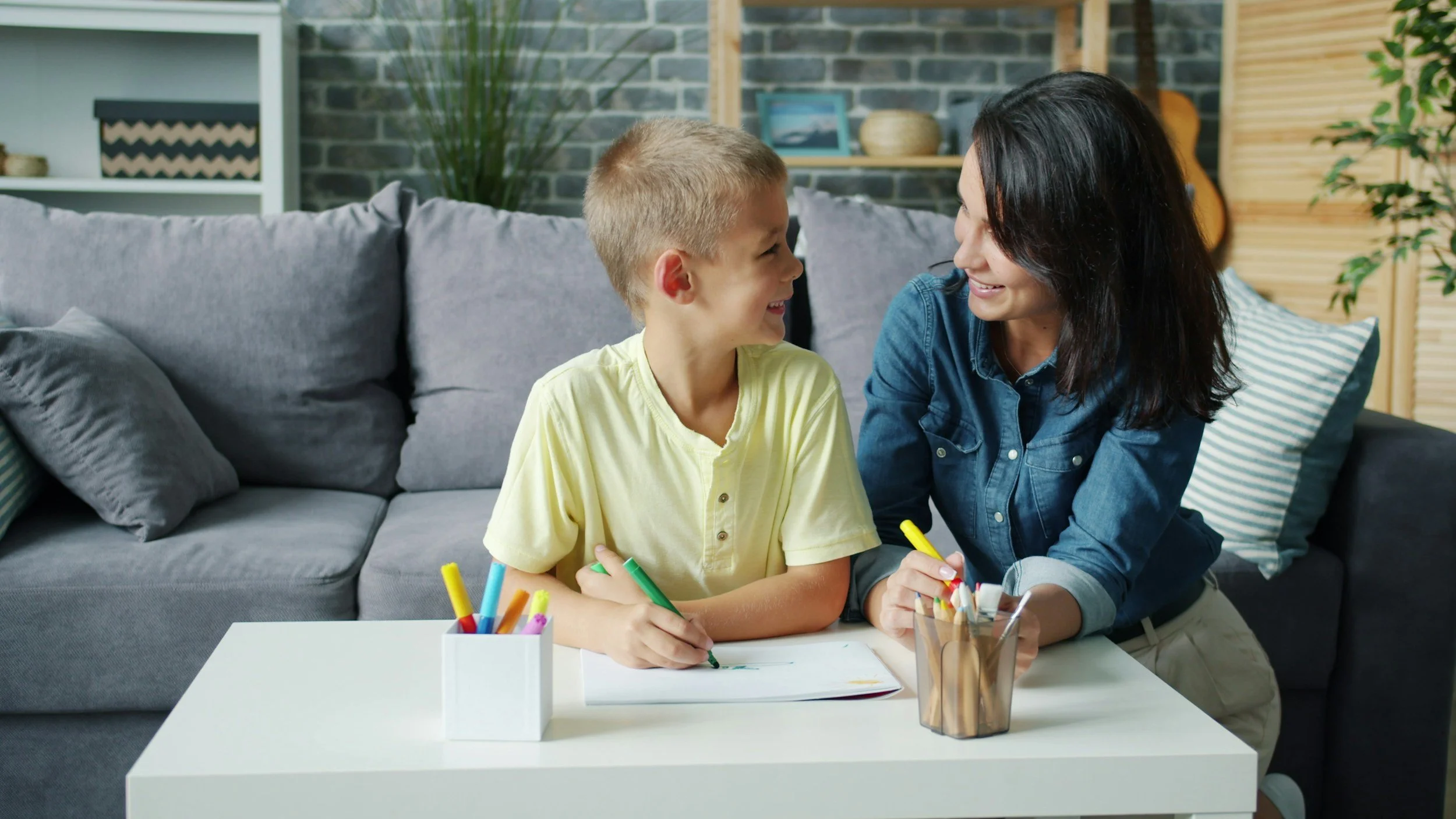
Is It ADHD, Anxiety, or Something Else Entirely?
Your child's behavior is telling you something. A comprehensive evaluation reveals what and why.
EVERYDAY PARENTING PSYCHOLOGY, PLLC
You've noticed something. Maybe your child can't sit still during homework but can focus on a video game for hours. Maybe mornings have become battlegrounds of meltdowns and refusal.
Maybe the school is calling about behavior, and you're getting different explanations from every person you talk to, ADHD from one, anxiety from another, "just a phase" from a third. The uncertainty is exhausting, and the stakes feel too high to guess.
At Everyday Parenting Psychology, we understand that overlapping symptoms are the rule in child development, not the exception. Inattention, emotional outbursts, withdrawal, and defiance can stem from ADHD, anxiety, trauma, sensory processing differences, autism, or a combination of factors that interact in ways no quick screening can untangle. That's why we don't jump to conclusions. Our clinicians conduct comprehensive developmental and diagnostic evaluations designed to differentiate between conditions that look remarkably similar on the surface but require very different approaches.
Families across New York City and Westchester County trust our team because we take the time to understand the full picture, your child's history, temperament, environment, and strengths, before arriving at answers. When you walk out of our practice, you don't just have a label. You have a clear understanding of what's happening, why it's happening, and exactly what to do next.
A comprehensive developmental and diagnostic evaluation at Everyday Parenting Psychology is not a quick checklist or a single-session opinion.
It is a multi-step clinical process conducted by experienced psychologists who specialize in the nuanced presentations of childhood. Our evaluations are specifically designed to use differential diagnosis, the systematic process of distinguishing between conditions that share overlapping symptoms, so that families receive answers grounded in evidence, not assumption.
The process begins with an in-depth parent interview where our clinicians gather a thorough developmental history, understand your concerns, and learn about your child's functioning across home, school, and social settings.
From there, your child participates in standardized assessments and clinical observations tailored to the questions at hand. These may include cognitive testing, attention and executive functioning measures, emotional and behavioral rating scales, and structured observations, depending on whether we're differentiating ADHD from anxiety, exploring autism, identifying trauma responses, or assessing sensory processing differences.
What sets our evaluations apart is the integration that happens after testing is complete. Our clinicians synthesize data from multiple sources, parent and teacher reports, clinical observation, standardized testing, and your child's own experience, to build a complete, coherent picture. We don't simply match symptoms to a diagnosis. We explain why your child is struggling, what's driving the behaviors you're seeing, and how those factors relate to one another.
Every family receives a detailed feedback session where findings are explained in clear, accessible language, along with a written report that includes specific, actionable recommendations for home, school, and therapeutic support. The goal is not just a diagnosis; it's a roadmap your family can use immediately.
Get Clarity About Your Child's Behavior
Key Benefits
-
When a child is struggling with focus, emotional regulation, or social difficulties, it's tempting to land on the most familiar explanation. But ADHD and anxiety, for example, can produce nearly identical classroom behaviors, distractibility, avoidance of tasks, difficulty following instructions, and irritability. A child who appears inattentive may actually be consumed by worry. A child who melts down after school may not have an emotional regulation disorder, they may be masking autistic traits all day and reaching their limit by 3 p.m.
Differential diagnosis is the clinical discipline of systematically ruling in and ruling out each potential explanation rather than matching surface behaviors to the first plausible category. At Everyday Parenting Psychology, our evaluations are structured specifically for this purpose. We assess across multiple domains, cognitive, attentional, emotional, social, sensory, and developmental, because no single data point can reliably separate ADHD from anxiety, trauma from sensory processing differences, or autism from social anxiety.
For families in New York City and Westchester, where children face high-performance academic environments and dense social landscapes, this precision matters enormously. A misidentified condition can lead to interventions that don't work, or worse, that exacerbate the actual issue. We've worked with families who spent years trying ADHD strategies for a child whose core difficulty was actually anxiety, and vice versa. When the right condition is identified, the right support follows, and progress that felt impossible suddenly becomes tangible. Our goal is to give your family the clarity that makes every next step more effective.
-
Not every clinician who administers an ADHD screener is equipped to identify the full range of conditions that mimic or co-occur with attention difficulties. At Everyday Parenting Psychology, our team of 12 experienced clinicians includes specialists in child development, neurodivergence, trauma-informed care, and family dynamics. This breadth of expertise means your child's evaluation isn't filtered through a single clinical lens.
Our clinicians are trained to recognize presentations that don't fit neatly into textbook descriptions, the anxious child who presents as oppositional, the twice-exceptional child whose giftedness masks their ADHD, the child with sensory processing differences whose avoidance behaviors are mistaken for defiance. We see these complex profiles regularly in our New York City and Westchester offices, particularly among intellectually curious families whose children are often high-functioning enough to compensate in some settings while struggling significantly in others.
Founded in 2018 by Dr. Layne Raskin and Dr. Jeanette Sawyer Cohen, Everyday Parenting Psychology was built on the principle that families deserve clinicians who are leaders in their fields, not generalists working outside their depth. Every member of our team is selected for their clinical excellence and their ability to hold complexity with compassion. When your child sits across from one of our psychologists, they are seen by someone who understands the subtleties of development, someone who will notice what a checklist cannot capture. That expertise translates directly into more accurate diagnoses, more targeted recommendations, and more confident next steps for your family.
-
A diagnosis alone doesn't change your child's daily life. What changes it is knowing exactly what to do with that information, which interventions to prioritize, what accommodations to request at school, how to adjust your parenting approach, and when to seek additional support. At Everyday Parenting Psychology, every evaluation culminates in a detailed feedback session and written report that translates clinical findings into a concrete action plan.
Our reports are not written for filing cabinets. They are written for parents, teachers, and other providers who need to understand your child and act on that understanding immediately. We include specific therapeutic recommendations, whether that means pursuing CBT for anxiety, executive functioning coaching for ADHD, occupational therapy for sensory differences, or a neurodiversity-affirming approach for an autistic child. We also provide school-specific guidance, including language that supports IEP or 504 requests in New York City public and independent schools, as well as Westchester County school districts.
During the feedback session, we walk through every finding in plain, accessible language. We explain not just what we found, but why it matters and how it connects to the behaviors you've been observing at home. Parents frequently tell us that this session is the moment everything clicks, the moment scattered concerns become a coherent story they can finally act on. We also remain available for follow-up questions and coordination with your child's school or other treatment providers, because real support doesn't end when the report is signed. It begins there.
-
Clinical categories are useful, but children don't read the diagnostic manual before developing symptoms. In practice, ADHD and anxiety co-occur in approximately 30–40% of children diagnosed with either condition. Autism and ADHD frequently present together. Trauma responses can mimic both ADHD and anxiety. Sensory processing differences can amplify all of the above. When a child arrives in our office, we expect complexity, and our evaluation process is built to handle it.
Consider a child who can't focus in class, avoids writing assignments, and has frequent emotional meltdowns. That profile could reflect ADHD with executive functioning deficits. It could reflect anxiety-driven avoidance. It could reflect an undiagnosed learning difference. It could reflect a trauma response. Or it could reflect two or three of these factors operating simultaneously. A brief screening or single-session assessment cannot reliably parse these apart, which is why our evaluations involve multiple sessions, multiple data sources, and multiple clinical perspectives.
For families across the New York metropolitan area, this complexity is compounded by high-demand academic environments where even modest attentional or emotional difficulties can cascade quickly. Children in competitive NYC independent schools or rigorous Westchester public programs may compensate effectively for years before symptoms become disruptive, by which point, the underlying issue has often become entangled with secondary anxiety, diminished self-esteem, or behavioral patterns that obscure the original difficulty. Our evaluations are designed to untangle these layers, identify root causes, and help your family understand not just what your child is doing, but what's driving it.
-
For many families, the idea of a "psychological evaluation" conjures images of cold clinical settings and stressful test batteries. We understand that concern, and we've designed our evaluation experience to feel different. At Everyday Parenting Psychology, your child will be met with warmth, patience, and genuine curiosity, not a stopwatch and a clipboard.
Our clinicians are experienced in working with children who are anxious about being assessed, resistant to new environments, or simply unsure of what to expect. We take time at the beginning of each session to build rapport, explain what's happening in age-appropriate terms, and ensure your child feels comfortable and in control. For younger children, portions of the evaluation may incorporate play-based interaction and observation. For older children and adolescents, we create space for their own voice and perspective to be part of the process.
This compassionate approach isn't just about comfort; it produces better data. A child who feels safe and engaged during an evaluation shows us their authentic functioning, not their performance under stress. We see how they actually think, communicate, regulate, and relate, which is precisely the information we need for an accurate diagnosis. Our NYC and Westchester offices are designed to feel welcoming rather than clinical, and our scheduling accommodates the realities of family life, including after-school and weekend availability. The evaluation process is rigorous, but it should never feel punishing, for your child or for you.
-
We recognize that scheduling a multi-session evaluation while managing work, school, and family logistics is no small feat. That's why Everyday Parenting Psychology offers evaluation services at two convenient locations, our Midtown Manhattan office near Columbus Circle and our Westchester office in Hartsdale, with additional telehealth options for appropriate components of the evaluation process.
Our New York City office at 330 West 58th Street is easily accessible by subway, bus, and car, making it a practical option for families across Manhattan, Brooklyn, Queens, and the broader metro area. Our Westchester office at 280 North Central Avenue in Hartsdale serves families throughout Westchester County and the surrounding region. For families in New Jersey, Connecticut, or Florida, select portions of the evaluation and all follow-up consultations can be conducted via our secure online therapy platform.
We also understand that the families we serve are often navigating packed schedules with multiple children, demanding careers, and school obligations that don't pause for appointments. Our administrative team works with you to build an evaluation schedule that fits your life, whether that means clustering sessions over a shorter period or spacing them to accommodate travel, school testing schedules, or seasonal demands. The goal is to remove logistical barriers so that getting clarity about your child's needs doesn't become another source of stress. We want the evaluation process to feel manageable from your first phone call through your final feedback session.
Service Categories
Comprehensive Developmental & Diagnostic Evaluations
Multi-session assessments that use differential diagnosis to distinguish between ADHD, anxiety, autism, trauma responses, sensory processing differences, and developmental delays. Each evaluation includes standardized testing, clinical observation, parent and teacher input, a detailed feedback session, and a written report with actionable recommendations for home, school, and treatment.
[ADHD Evaluation & Treatment](/adhd-treatment)
Our ADHD-specific services include thorough diagnostic assessment as well as ongoing treatment, practical life strategies, executive functioning support, mindfulness techniques, and psychoeducation. We help children, adolescents, and adults understand their ADHD, manage symptoms, and build on their strengths with a neurodiversity-affirming philosophy.
[Autism Evaluation & Support](/autism-support)
We provide autism-specific diagnostic evaluation and ongoing support tailored to each individual's needs. Our approach focuses on building social-emotional skills, enhancing communication, managing sensory sensitivities, and fostering authentic self-expression and self-advocacy in a safe, affirming environment.
Anxiety & Emotional Regulation Support
Using evidence-based therapies including CBT and mindfulness-based approaches, we help children and adolescents who struggle with worry, avoidance, emotional meltdowns, and social withdrawal. Our clinicians identify whether anxiety is a primary condition or secondary to another factor, and tailor treatment accordingly.
Twice-Exceptional (2e) Assessment & Support
For children who possess advanced intellectual abilities alongside neurodevelopmental differences like ADHD or autism, our 2e evaluations and support services help families understand the full picture, empowering children to embrace both their exceptional strengths and their unique needs.
Our Process
Step 1: Schedule Your Initial Consultation
Contact our team by phone or through our [online form](/contact) to describe your concerns and schedule a consultation. During this initial conversation, we'll listen carefully, answer your questions, and determine whether a comprehensive evaluation is the right next step for your child. Most families are scheduled within one to two weeks of their first call.
Expected timeframe: 15–20 minute phone call. Your involvement: Share your observations, concerns, and any prior evaluations or reports
Step 2: Complete the Parent Interview and Intake
Before testing begins, you'll participate in an in-depth parent interview with your child's evaluating clinician. This session covers your child's developmental history, current functioning, academic performance, social relationships, and family context. We'll also gather teacher rating scales and any relevant school or medical records to ensure we have a complete picture before your child's first testing session.
Expected timeframe: 60–90 minutes (parent session, without child present). Your involvement: Provide developmental history, school records, and complete intake forms
Step 3: Comprehensive Assessment Sessions
Your child participates in one or more assessment sessions tailored to the diagnostic questions at hand. Testing may include cognitive and academic measures, attention and executive functioning tasks, emotional and behavioral assessments, and structured clinical observation. Our clinicians build rapport before diving into formal testing, ensuring your child feels safe and engaged throughout.
Expected timeframe: 2–4 sessions, typically 60–90 minutes each. Your involvement: Transport your child to sessions; our team handles the rest
Step 4: Integration, Diagnosis, and Report Writing
After all data is collected, your clinician synthesizes findings from every source, testing results, parent and teacher reports, clinical observations, and your child's own input, to arrive at a clear diagnostic picture. A comprehensive written report is prepared with diagnostic conclusions, explanatory context, and detailed recommendations.
Expected timeframe: 1–2 weeks after final testing session. Your involvement: None required during this phase
Step 5: Feedback Session and Next Steps
You'll meet with your clinician for a thorough feedback session where every finding is explained in clear, accessible language. We'll discuss the diagnosis, answer your questions, review recommendations for therapy, school accommodations, and home strategies, and help you prioritize next steps. You'll leave with both the written report and a clear roadmap forward.
Expected timeframe: 60–90 minutes. Your involvement: Attend the session (both parents/caregivers encouraged), ask questions, and plan next steps together.
Our Approach
At Everyday Parenting Psychology, our clinical philosophy begins with a commitment we take seriously: we don't jump to conclusions.
In a landscape where ADHD diagnoses can be made in a single 15-minute visit and anxiety can be identified from a brief questionnaire, we believe children and families deserve better. Our approach is rooted in intellectual rigor, clinical depth, and a genuine respect for the complexity of child development.
Every evaluation we conduct uses a differential diagnostic framework, meaning we systematically assess for the full range of conditions that could explain your child's symptoms rather than defaulting to the most obvious or familiar diagnosis. We evaluate for ADHD, anxiety, autism, trauma responses, sensory processing differences, developmental delays, and giftedness, because any of these, alone or in combination, can produce the behaviors that brought you to our door. This approach requires more time and expertise than a quick screening, but it produces answers you can trust and act on with confidence.
Our clinicians bring a neurodiversity-affirming perspective to every evaluation. We don't pathologize difference, we seek to understand it. When a child is diagnosed with ADHD or autism in our practice, that diagnosis comes with context, compassion, and a strengths-based framework that helps families see their child as a whole person, not a collection of deficits. We integrate evidence-based methodologies, including cognitive behavioral approaches, mindfulness-based techniques, and trauma-informed practices, into both our assessment and treatment recommendations.
For families in New York City and Westchester County, this approach addresses a real need. Parents in high-performing communities often encounter conflicting opinions from teachers, pediatricians, and well-meaning friends. Our role is to cut through the noise with clinical clarity, to give you an unambiguous understanding of what's happening with your child and a detailed plan for supporting them. We serve intellectually curious families who expect exceptional care, and we deliver it with the thoroughness and compassion that every child deserves.
Frequently Asked Questions
Everyday Parenting Psychology was founded in 2018 by Dr. Layne Raskin and Dr. Jeanette Sawyer Cohen and has grown to a team of 12 experienced clinicians serving families across New York City and Westchester County. We specialize in comprehensive developmental and diagnostic evaluations, maternal mental health, child therapy, neurodiversity-affirming care, and family support. [Learn more about our team and mission](/about).
-
If your child is struggling and you're unsure what's driving the difficulty, or if previous interventions haven't produced expected results, a comprehensive evaluation can provide the diagnostic clarity needed to guide treatment. Therapy works best when it's targeted to the right condition. An evaluation ensures you're not investing time and resources in an approach that doesn't match your child's actual needs. [Learn more about our process](/contact).
-
Yes, and it's more common than many parents realize. Research suggests that 30–40% of children with ADHD also have a co-occurring anxiety disorder. When both conditions are present, addressing only one often leaves the child still struggling. Our evaluations are designed to identify co-occurring conditions so that treatment recommendations address the full clinical picture, not just one piece of it.
-
A pediatric ADHD screening typically relies on brief questionnaires and a short office visit. While useful as a first step, these screenings cannot differentiate between ADHD, anxiety, trauma, autism, sensory processing issues, or other conditions that produce similar symptoms. Our evaluations involve multiple sessions, standardized testing across cognitive and emotional domains, multi-source data collection, and thorough clinical analysis, resulting in a diagnosis you can rely on and act on. [Explore our ADHD services](/adhd-treatment).
-
We evaluate children across a broad developmental range, from early childhood through adolescence. The specific assessment tools and approaches we use are tailored to your child's age, developmental level, and presenting concerns. Our clinicians have specialized training in child development and are experienced in working with children at every stage.
-
Most comprehensive evaluations involve 4–6 sessions total (including the parent interview, testing sessions, and feedback session) and are completed within 3–6 weeks, depending on scheduling. We work with families to create a timeline that fits their needs while maintaining the thoroughness required for accurate diagnosis.
Contact Us
We are here to help! Fill out the form to schedule an initial consultation. Please note that we currently have a waitlist for many of our offerings.
New York City